

Why the World’s Hottest Fitness Brands Choose Shopify
What Gymshark, Huel, Alo Yoga and other leading fitness brands get from Shopify, and how growing fitness and wellbeing brands can use the same playbook.
In this guide
- The short version
- 1. Growth without the growing pains
- 2. Design that converts
- 3. A mobile experience that sells
- 4. Marketing and SEO built in
- 5. Inventory and order management
- 6. Subscriptions for recurring revenue
- 7. Community and loyalty
- Why Shopify suits fitness and wellbeing brands
- Shopify for fitness brands FAQ
The short version
- Many of the biggest fitness and wellbeing brands, including Gymshark, Huel and Alo Yoga, run on Shopify.
- It handles traffic spikes from product drops, works brilliantly on mobile and has marketing and SEO tools built in.
- Subscriptions and loyalty apps help turn one-off buyers into a recurring, loyal community.
- You don’t need a global budget to borrow the playbook: the same platform and principles work for growing brands.
Look at the brands leading fitness and wellbeing e-commerce, such as Gymshark, Huel, Alo Yoga, AYBL, Alphalete Athletics and NOBULL, and you’ll find Shopify behind many of them. Here’s why it keeps winning in this space, and how smaller brands can borrow the same playbook.
1. Growth without the growing pains
Why it matters: Fitness brands live on launches and drops. Your platform has to handle traffic spikes without slowing down or falling over.
Gymshark grew from a garage start-up into one of the UK’s best-known fitness brands, and its big collection drops are exactly the kind of traffic spike Shopify’s hosted infrastructure is built for. Alo Yoga sells internationally with local currencies and languages.
Takeaway: Shopify handles hosting, security and scaling, so your team can focus on product and marketing rather than servers.
2. Design that converts
Why it matters: In fitness, image is everything. Your store needs to look like your brand and be built to convert.
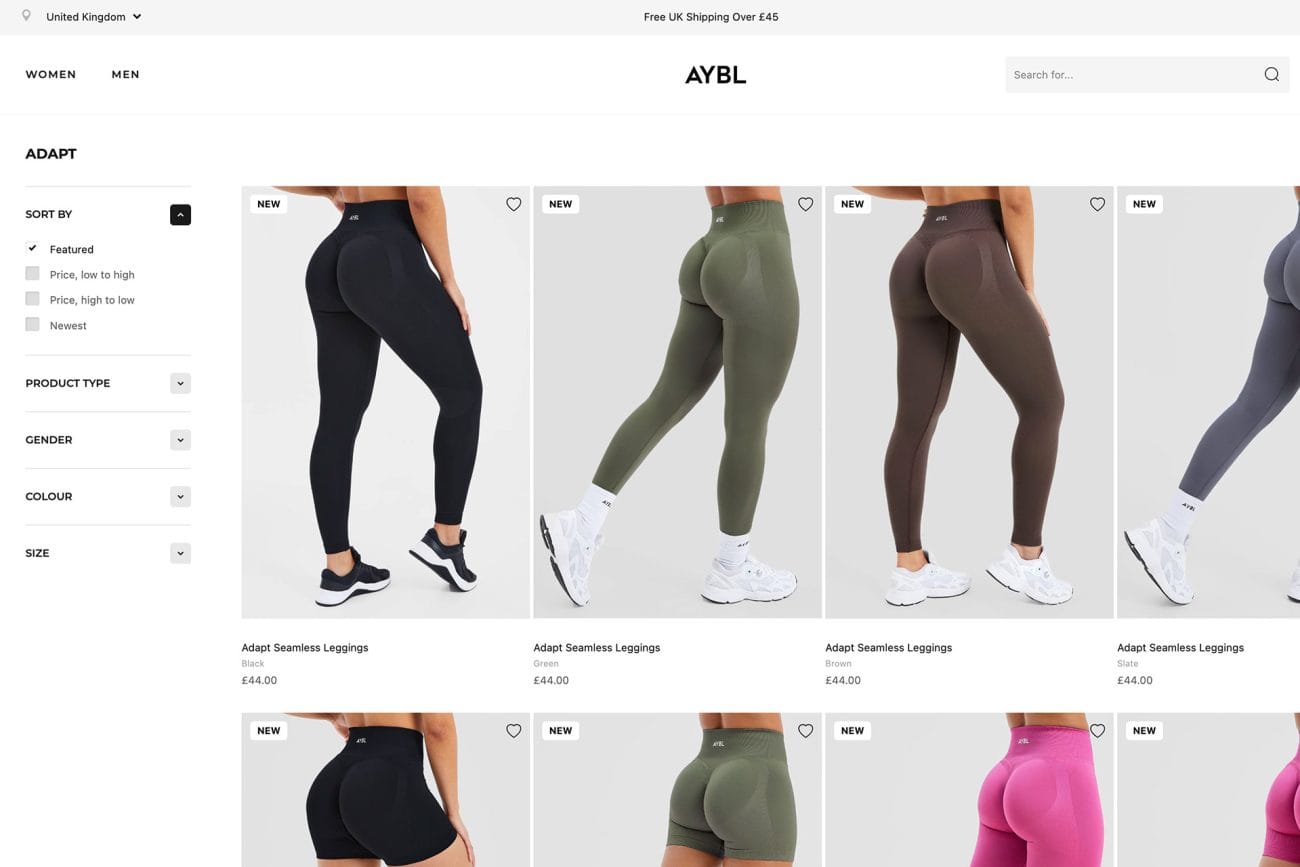
AYBL and Alphalete show how far a Shopify store can be pushed to feel like a brand experience rather than a catalogue. The right theme and a considered Shopify design build trust, engagement and conversion.
Takeaway: Choose a theme that fits your catalogue and brand, then customise it. Our premium Shopify theme roundup is a good starting point.
3. A mobile experience that sells
Why it matters: Most fitness shoppers discover brands on social media and browse on their phones, so a slow or clumsy mobile store costs sales.
Shopify’s themes are mobile-first, and Shop Pay gives returning customers a fast, saved checkout on any device.
Takeaway: Test your store on a phone first, not last: speed, navigation and checkout.
4. Marketing and SEO built in
Why it matters: The best products don’t sell if nobody finds them. In fitness, SEO and social are the main growth channels.
Shopify includes editable titles, meta descriptions, URLs and sitemaps, plus native selling on Instagram, Facebook and TikTok.
Takeaway: Pair Shopify’s built-in tools with a proper Shopify SEO plan to turn followers and searchers into customers.
5. Inventory and order management
Why it matters: Running out of stock or messing up orders kills repeat business.
Shopify tracks inventory across multiple locations in real time and connects to fulfilment and warehouse apps as you grow.
Takeaway: Get stock and fulfilment right early, before a viral drop tests it for you.
6. Subscriptions for recurring revenue
Why it matters: Subscriptions bring predictable revenue and loyal customers, ideal for supplements, nutrition and consumables.
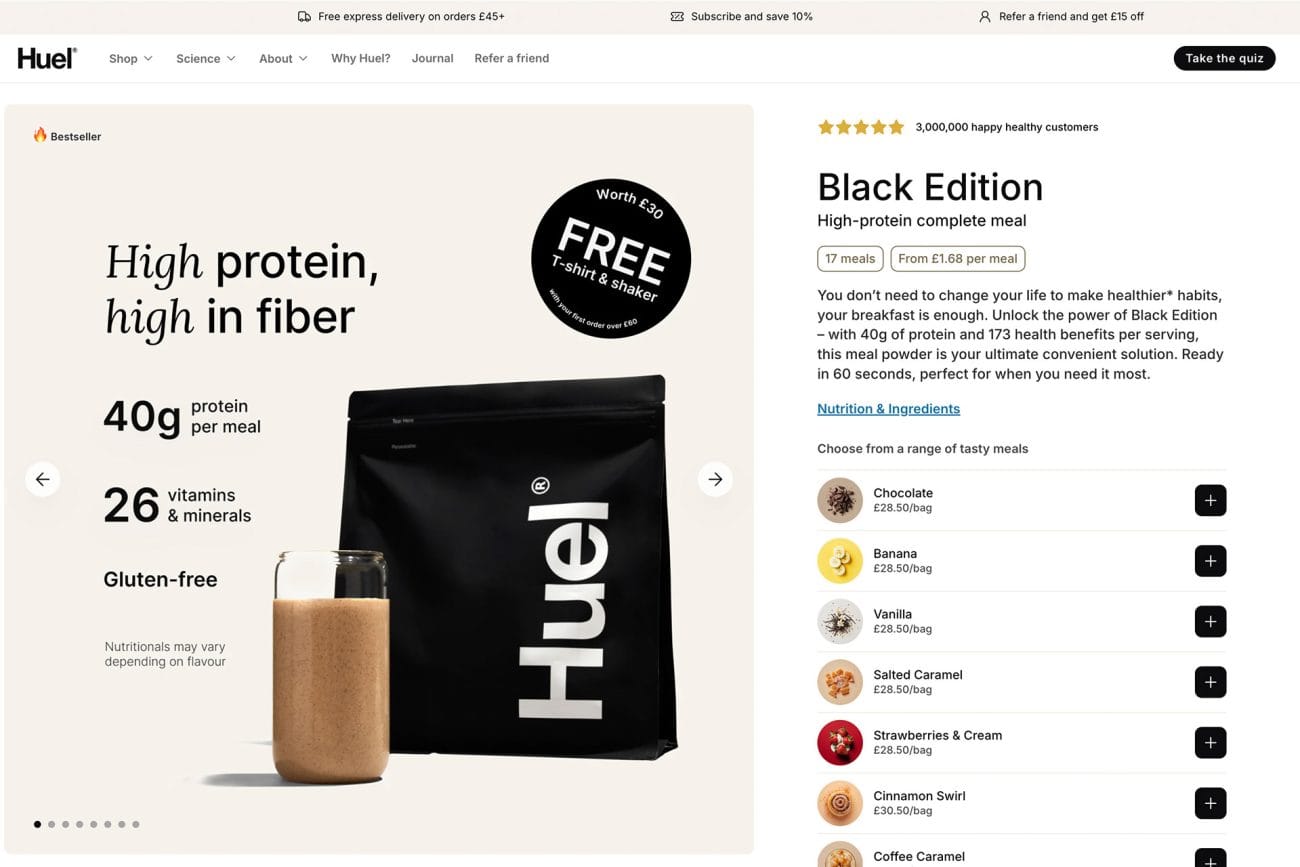
Huel is a good example of a subscription-led brand, and on Shopify subscriptions run through apps such as Recharge or Shopify Subscriptions.
Takeaway: If you sell anything people reorder, offer a subscription option.
7. Community and loyalty
Why it matters: Fitness brands sell a lifestyle, not just products. Loyal customers spread the word.
Shopify’s app ecosystem covers loyalty points, referrals, reviews and user-generated content, so you can reward the people who champion your brand.
Takeaway: Treat community as a channel: reward reviews, referrals and repeat purchases.
Why Shopify suits fitness and wellbeing brands
| Need | How Shopify helps |
|---|---|
| Product drops | Hosted infrastructure built for traffic spikes |
| Brand-led design | Customisable themes and sections |
| Mobile shoppers | Mobile-first themes and Shop Pay |
| Discovery | Built-in SEO settings and social selling |
| Repeat revenue | Subscription and loyalty apps |
Shopify for fitness brands FAQ
Why do so many fitness brands use Shopify?
It combines reliable hosting, customisable design, built-in marketing tools and a huge app ecosystem, and it scales from a start-up to a global brand.
Can Shopify handle high-traffic product drops?
Yes. Shopify is fully hosted and built to handle traffic spikes during launches and sales, which is why high-growth fitness brands use it.
Can I run subscriptions on Shopify?
Yes, through apps such as Recharge or Shopify Subscriptions, which suit supplements, nutrition and other repeat purchases.
Is Shopify good for SEO?
It covers the essentials (titles, meta descriptions, URLs, sitemaps), but strong rankings still need good content, site structure and links.
Ready to build your fitness brand on Shopify?
Whether you’re launching a new fitness brand or scaling an existing store, WEBKANDY designs, builds and optimises Shopify stores that look the part and convert.
